

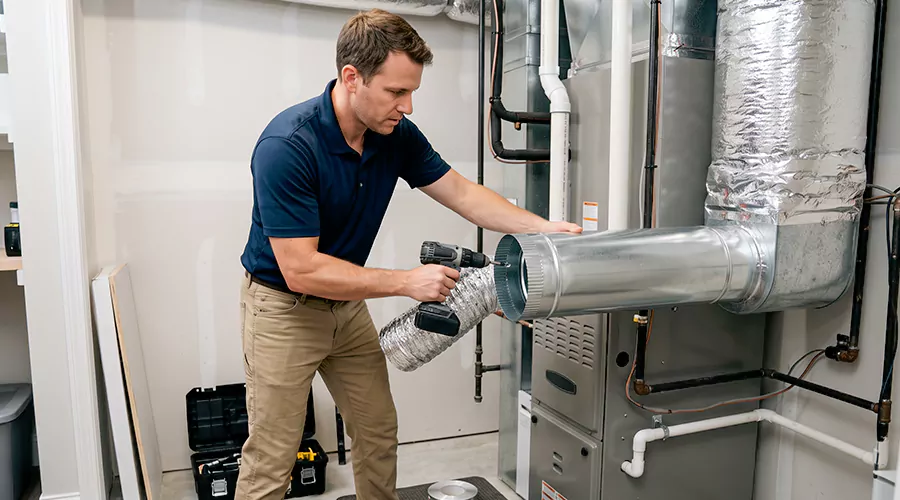
Air duct replacement typically costs $1,400 to $5,600 for many whole-house residential projects in the United States, depending on the amount of ductwork being replaced. Published 2026 estimates also show smaller projects averaging around $1,250, while extensive installations in larger homes can exceed $7,000. The final price depends on duct length, material, accessibility, labor, and whether the existing system needs to be redesigned.
Air ducts carry heated and cooled air between HVAC equipment and the rooms in a home. When the ductwork is damaged, conditioned air can escape into attics or crawlspaces instead of reaching the intended living areas. Crushed flexible ducts may also restrict airflow, making certain rooms difficult to heat or cool.
Replacement involves removing damaged or unsuitable ducts and installing new passages that meet the heating and cooling system's airflow requirements. Some homes need only one or two branches replaced, while others require a substantial part of the distribution system to be rebuilt. The amount of work is one reason national price estimates vary considerably.
Before approving replacement, homeowners should determine whether the existing ducts are structurally damaged or simply need repairs. Sound ducts with leaking joints can often be secured and sealed. Replacement is more appropriate when the material has collapsed, deteriorated, or cannot provide the required airflow.
What Is the Average Air Duct Replacement Cost in 2026?
Published U.S. pricing guides report different averages because their project samples and scopes vary. HomeGuide estimates $1,400 to $5,600 for residential ductwork replacement, with an average near $3,500. Angi's August 2026 data reports an average around $1,250, with many recorded projects between $452 and $2,181.
The difference is important when budgeting. A national average that includes smaller replacement projects should not be interpreted as the expected cost of rebuilding every supply and return duct in a large house. The homeowner needs an estimate based on the actual footage and number of duct runs being replaced.
| Replacement Scope | Estimated U.S. Cost |
|---|---|
| Smaller duct replacement projects in Angi's 2026 data | $452–$2,181 |
| Average in Angi's project data | Approximately $1,250 |
| Residential ductwork replacement in HomeGuide's estimates | $1,400–$5,600 |
| Average in HomeGuide's replacement data | Approximately $3,500 |
| Larger or complicated whole-house projects | $7,000 or more |
| Replacement of an individual duct run | $270–$500 in many straightforward projects |
These figures represent different project sizes and should not be added together. A contractor replacing one damaged branch may quote a fraction of the price required for replacing the complete duct system. Access behind finished walls and the need for custom fittings can also push a project beyond typical ranges.
A written estimate should identify the ducts being replaced, their dimensions, the material used, and any additional construction work. This makes the price more meaningful than a general national average.
How Much Does Air Duct Replacement Cost per Linear Foot?
Air duct replacement commonly costs approximately $25 to $55 per linear foot in HomeGuide's installed replacement estimates. Angi reports a lower range of $10 to $25 per linear foot in its 2026 guide. The difference reflects variations in cost data, installation conditions, and the projects represented.
A linear foot measures the length of the duct along its route. It does not indicate the duct's diameter or the amount of insulation required. Replacing a large rectangular metal trunk can involve considerably more material and labor than replacing a small flexible branch of the same length.
The following examples use $25 to $55 per linear foot for calculating a preliminary replacement budget.
| Duct Length | Illustrative Replacement Cost |
|---|---|
| 20 linear feet | $500–$1,100 |
| 40 linear feet | $1,000–$2,200 |
| 60 linear feet | $1,500–$3,300 |
| 80 linear feet | $2,000–$4,400 |
| 100 linear feet | $2,500–$5,500 |
| 120 linear feet | $3,000–$6,600 |
These calculations should not replace a contractor's quote. The final cost may depend on the number of fittings, transitions, and registers, not just the total footage. A contractor may also use a per-run price or a fixed project price instead of charging by length.
Ask whether the linear-foot rate includes removing the old duct, installing insulation, securing connections, and sealing joints. Those tasks are necessary for a proper replacement but may be handled differently by individual contractors.
How Much Does Air Duct Replacement Cost by Home Size?
Larger homes generally contain longer duct runs and more supply openings. However, the amount of ductwork does not increase at exactly the same rate as floor area. A single-story home and a multistory home of the same size can have different duct layouts and access requirements.
The following published estimates illustrate how whole-house replacement costs may change with home size.
| Home Size | Estimated Replacement Cost |
|---|---|
| 1,000–1,500 square feet | $1,400–$3,400 |
| 1,500–2,000 square feet | $2,100–$4,500 |
| 2,000–2,500 square feet | $2,800–$5,600 |
| 2,500–3,000 square feet | $3,500–$6,700 |
| 3,000–3,500 square feet | $4,200–$7,800 |
| 3,500–4,000 square feet | $4,900–$9,000 |
These estimates are intended for budgeting, not as guaranteed prices for a specific home. Actual costs depend on how much of the system is replaced. A larger property needing only one damaged branch repaired could cost less than a smaller house requiring extensive new ductwork.
The number of HVAC systems also matters. Separate upstairs and downstairs systems may have independent supply and return networks. Replacing both can require additional equipment connections, design work, and labor.
What Factors Affect Air Duct Replacement Prices?
Duct replacement prices are influenced by the condition of the existing system and the work needed to install new materials. Accessibility is often a major factor because exposed ducts are easier to replace than passages hidden inside finished building cavities. The correct replacement design also affects the quantity and dimensions of materials.
Type of Duct Material
Flexible ductwork is commonly used for branch runs in residential attics and crawlspaces. It is lightweight and can follow suitable routes around framing, but it must be installed carefully to avoid compression and sagging. Rigid sheet metal provides a more durable passage but can require additional fabrication and installation labor.
Fiberglass duct board is another material used in some HVAC systems. Its installation and repair requirements differ from those of metal and flexible ducts. The contractor should select materials that meet the equipment's airflow needs and applicable building requirements.
An inexpensive duct that is incorrectly sized or poorly supported may perform worse than a properly installed alternative. Material price should therefore be evaluated alongside durability, insulation, and installation quality.
Amount of Ductwork Being Replaced
Replacing one damaged branch costs considerably less than rebuilding a complete distribution system. A localized project may reuse sound trunks, fittings, and registers. A whole-house replacement may require new main ducts, branch takeoffs, and return passages.
The estimate should identify exactly which sections will be retained. A contractor should not assume every duct needs replacement because one branch has failed. Reusing sound components can reduce cost when their dimensions and condition are suitable.
Location Inside the Home
Ducts in an unfinished basement are often easier to reach than ducts in a cramped attic or crawlspace. Attic work can require special precautions because of heat and limited walking surfaces. Crawlspace projects may involve moisture or clearance problems that slow installation.
Ducts hidden behind finished ceilings or walls can require opening building surfaces. The homeowner may then need drywall repair, painting, or other restoration after the new duct is installed. These expenses should be identified before work begins.
Duct Sizing and System Design
Duct dimensions should match the airflow required by the heating and cooling equipment. Replacing an undersized branch with another duct of the same size may leave the original comfort problem unresolved. A proper design considers room loads, blower performance, duct resistance, and the complete supply and return arrangement.
ACCA Manual D provides recognized residential duct sizing principles. The contractor may also use room-by-room heating and cooling load calculations when redesigning the system. Design work becomes particularly important when the homeowner changes HVAC equipment or adds conditioned space.
Insulation Requirements
Ducts installed outside the home's conditioned space need appropriate insulation. In an unconditioned attic, the insulation helps limit unwanted heating or cooling of the air as it passes through the duct. It can also reduce the likelihood of condensation when installed with a suitable vapor barrier.
The required insulation rating depends on local code and the duct's location. Some installations call for R-8 supply duct insulation, while return ducts may have different requirements. The contractor should verify the standards adopted locally rather than apply one rating to every project.
Labor and Accessibility
Labor increases when installers must work in confined or difficult locations. Removing old ductwork may be time-consuming when it passes beneath framing or around other building systems. High attic temperatures can also limit safe working periods.
Local contractor rates affect the final price. Two projects using similar materials may have different labor costs because of market conditions and site access. Requesting several itemized estimates helps establish a reasonable local budget.
How Much Does Air Duct Replacement Cost by Location?
The location of the existing ducts affects how they can be removed and installed. Exposed basement ducts generally provide better working access, while attic and crawlspace systems can require additional preparation.
| Ductwork Location | Typical Replacement Cost |
|---|---|
| Basement | $1,800–$3,100 |
| Attic | $2,200–$5,600 |
| Crawlspace | $3,000–$7,300 |
| Mobile home | $1,000–$3,300 |
These estimates represent location-based residential projects with varying amounts of ductwork. They are not prices for one duct run. The actual amount depends on the home's size and the sections that need replacement.
Location can also influence the materials selected. Attic ducts require attention to heat exposure and insulation, while crawlspace ducts may need protection from moisture. A sound installation should address the conditions surrounding the ductwork.
How Much Does It Cost to Replace One Air Duct?
Replacing one residential duct run commonly costs $270 to $500 for a straightforward project in published estimates. The price may be higher when the section is long, difficult to reach, or requires custom fittings. A small accessible flexible branch can be much less involved than a large metal trunk.
A contractor should inspect the connection points before selecting a replacement. The new duct needs to match the required airflow and connect securely to the existing system. Simply installing a new hose with the same visible diameter may not be appropriate if the original design was inadequate.
Localized replacement can be cost-effective when the remaining ducts are sound. For example, one flexible branch crushed by stored attic materials may be replaced without changing every other branch. The contractor should also correct whatever caused the original damage.
Is It Cheaper to Repair or Replace Air Ducts?
Repair is usually less expensive when the damage is limited and the existing material remains structurally sound. A loose metal connection may need mechanical fastening and approved duct sealant. A severely crushed flexible duct or rusted metal section may require replacement.
| Duct Problem | Likely Approach | Reason |
|---|---|---|
| Small leak in sound metal joint | Repair | Stable joint can be sealed |
| Loose but undamaged connection | Repair | Fitting can be secured |
| Minor insulation damage | Repair insulation | Duct passage remains usable |
| Severely crushed flexible duct | Replace section | Air passage is restricted |
| Extensive rust and holes | Replace section | Metal is weakened |
| Wet or moldy fiberglass duct material | Replace affected material | Porous material may not be restorable |
| Incorrect duct sizing | Redesign as needed | Existing system cannot deliver intended airflow |
| Multiple deteriorated branches | Consider broader replacement | Repeated repairs may be impractical |
Repair costs depend on the defect and the amount of labor involved. A small sealing project should not be compared directly with installing a complete new duct system. The contractor should explain whether the problem is caused by leakage, physical damage, or incorrect design.
Replacement is not automatically justified by the age of the ductwork. Sound ducts can remain functional for many years. Inspection and testing provide a better basis for deciding.
What Additional Costs Should You Budget For?
A duct replacement quote may not include every related service. The homeowner should ask whether old duct removal, disposal, access repairs, permits, and final testing are covered. Additional charges become more likely when the system needs redesign or hidden damage is found.
Angi's 2026 guide lists examples of approximately $200 to $600 for duct design work and $100 to $300 for certain post-installation inspections when billed separately. Cleanup and debris removal may also carry a separate charge. Local fees and contractor arrangements vary, so these amounts should be treated as planning references.
Possible additional work includes:
- Duct design or airflow calculations
- Permit applications and required inspections
- Removal and disposal of old duct materials
- Additional duct insulation
- Replacing damaged register boots or junction boxes
- Drywall and ceiling restoration
- Repairing roof leaks or moisture damage
- Testing duct leakage and room airflow
- Specialized assessment of suspected asbestos-containing material
Older buildings may contain insulation or wrapping that requires special handling. The Environmental Protection Agency advises leaving suspected asbestos-containing materials undisturbed until qualified assessment and any necessary professional work can be arranged. These conditions should be identified before demolition begins.
How Long Does Air Duct Replacement Take?
Many straightforward residential duct replacement projects take approximately one to two working days. However, extensive replacement involving several systems can require additional time. Access conditions and the need for construction repairs can also extend the schedule.
Replacing one accessible duct branch may take much less time than removing and rebuilding the complete network. A redesign also adds preparation before installation. If ceilings must be opened and restored, the overall project can last longer than the HVAC installation itself.
The contractor should provide an estimated schedule that accounts for equipment downtime. Homes may temporarily lose heating or cooling while affected ducts are disconnected. Weather conditions and occupant needs should be considered when scheduling substantial replacement.
Can New Air Ducts Lower Energy Bills?
New ductwork may reduce energy waste when it replaces a system with substantial leakage or poor insulation. ENERGY STAR estimates that typical homes can lose approximately 20% to 30% of the air moving through ducts because of leaks and poor connections. Correcting those problems can help deliver more conditioned air to the intended rooms.
However, replacing sound ducts does not automatically produce a particular percentage of savings. The result depends on the severity of the original defects and how the new system is installed. Proper sealing and insulation matter more than simply using new materials.
Airflow should also be checked after replacement. A new duct with an undersized diameter or several sharp bends may reduce comfort even when it is airtight. The installation should address both leakage and airflow resistance.
What Should Be Included in a Duct Replacement Quote?
A clear quote should identify the work being performed and the materials to be used. General descriptions such as replace all ductwork are not enough when the homeowner cannot see the concealed system. The contractor should explain how the new duct layout will serve each room.
Request the following information:
- Which existing duct sections will be removed?
- Which sound sections will remain in service?
- What duct materials and insulation ratings will be used?
- How will the new duct sizes be determined?
- Are supply and return ducts both included?
- Will all connections be mechanically secured and sealed?
- Are permits and local inspections included?
- Is old material disposal included?
- Will leakage and airflow be tested after installation?
- Are ceiling or wall repairs included?
- What warranty applies to materials and workmanship?
A proposal that describes these items is easier to compare with competing estimates. It also provides a reference if the finished installation differs from the agreed design.
Should You Replace Air Ducts When Installing a New HVAC System?
A new heating or cooling system does not always require new ductwork. Existing ducts may remain suitable when they are structurally sound and correctly sized for the replacement equipment. However, a change in system capacity or blower characteristics may require a design review.
The contractor should evaluate supply and return airflow rather than assume the old duct network is adequate. Equipment installed on restrictive ducts may struggle to deliver the expected performance. Larger equipment is not automatically the solution to poor airflow.
When duct replacement is necessary, coordinating it with HVAC equipment installation can reduce repeated labor. However, the work should remain justified by the condition and design requirements of the distribution system.
How Can You Avoid Overpaying for Air Duct Replacement?
The most effective way to control costs is to identify which ducts truly need replacement. A contractor should provide photographs or other documentation of collapsed, deteriorated, or unsuitable sections. Significant airflow or leakage problems should be evaluated before the entire system is condemned.
Compare at least two written quotes based on similar materials and work scopes. A low price may exclude insulation or testing, while a higher price may include design changes and complete return duct replacement. Those differences affect the value of the finished system.
Do not choose materials solely by their initial cost. Poorly supported flexible ducts and unsealed connections can create new problems soon after installation. Installation quality determines how well the replacement performs.
Conclusion
Air duct replacement commonly costs $1,400 to $5,600 for many residential projects, although smaller repairs and larger whole-house installations can fall outside that range. Duct length, material, access, and system design all influence the final price. Replacing only damaged sections may be sufficient when the remaining ductwork is sound. The contractor should also seal, insulate, and test the new passages appropriately. Before approving the project, request a detailed estimate identifying exactly which ducts will be replaced.